
If you’re preparing for your first spinal decompression session, you might have questions about how it works, how it feels, and what happens during the appointment. While spinal decompression therapy is increasingly popular as a non-surgical option for addressing back or neck issues, many people are unfamiliar with what the actual experience is like.
This post breaks down what to expect before, during, and after your spinal decompression first visit—so you can approach the process feeling informed and at ease.
What Is Spinal Decompression Therapy?
Spinal decompression is a technique that uses gentle, motorized traction to stretch the spine in controlled cycles. The goal is to reduce pressure on spinal discs and nerves, improve circulation, and support healing. It’s most commonly used to address disc-related problems such as herniation, sciatica, or degenerative disc disease.
If you want to dive deeper into how the therapy works, visit this overview of spinal decompression therapy.
What to Expect: Before and After Spinal Decompression Therapy
Before the Session: Intake & Assessment
On your first visit, expect to begin with an intake process that includes a health history review and a discussion of your symptoms. You may be asked questions about your posture, movement limitations, or past injuries. This helps determine whether spinal decompression is appropriate for your situation.
Some providers may also perform a basic physical exam or review past imaging (such as X-rays or MRIs) if available. The goal is to build a clear picture of what’s contributing to your discomfort and to decide how decompression therapy might fit into your overall care.
You will likely have some form of pre-treatment, whether it be cold laser therapy, shockwave therapy, or chiropractic treatment prior to spinal decompression.
During the Session: How the Therapy Works
Once the assessment is complete and spinal decompression is deemed appropriate, you’ll be guided through the therapy process. Sessions typically last between 15 and 30 minutes.
Here’s what usually happens:
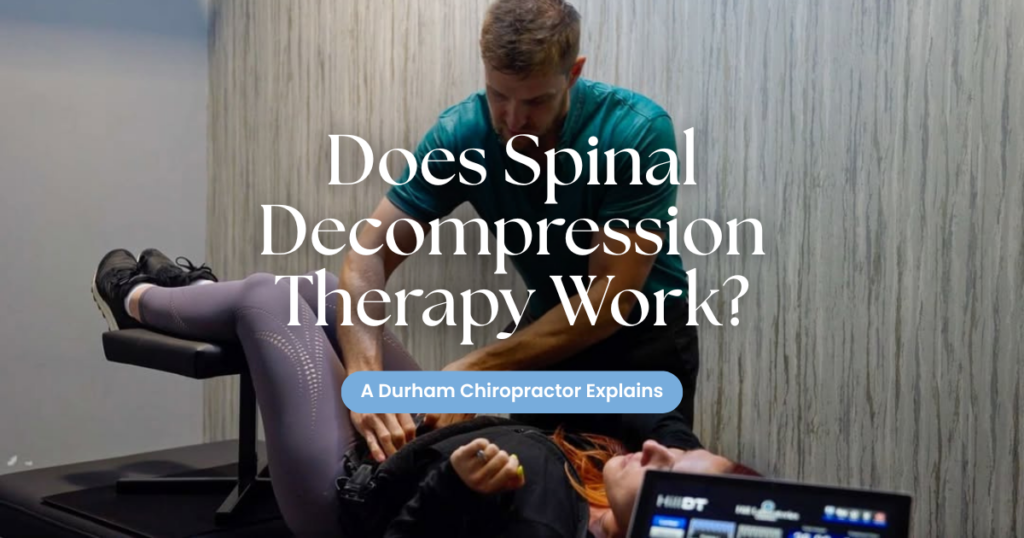
- You’ll lie on a motorized table, either face up or face down, depending on your condition.
- A harness is placed around your lower body (for lumbar decompression) or neck (for cervical decompression) to help secure you in place.
- The table gently stretches and releases your spine in timed intervals.
The traction is computer-controlled and personalized based on your condition, weight, and comfort level. Most people describe the experience as a gentle pulling sensation—sometimes accompanied by a sense of release or relief (more on this in the section below). It should not be painful.
If anything feels uncomfortable, the session can be paused or adjusted. The process is designed to be gradual and safe.
After the Session: Immediate Effects & Follow-Up
It’s common to feel slightly different after a spinal decompression session. Some people report a sensation of lightness or increased mobility. Mild soreness, similar to what you might feel after stretching or physical therapy, is also possible—especially after the first few visits.
Hydration is typically encouraged after treatment to support disc rehydration and circulation.
Some providers may pair spinal decompression with additional therapies like chiropractic adjustments, laser therapy, or soft tissue work. These combined approaches aim to support long-term improvement and prevent recurrence of symptoms.
If you’re curious about how decompression fits into broader care models, you can explore examples on this treatment page.
What Does Spinal Decompression Feel Like?
Most patients describe spinal decompression as a gentle stretching sensation along the spine – not painful, and for many, immediately relieving. You’ll be lying on a motorized table, fully clothed, while the machine applies a slow, controlled traction force to the targeted area.
Some patients feel a mild pulling sensation in the lower back or neck depending on where the treatment is focused. Others notice a feeling of decompression or release, almost like the spine is being given room to breathe. It’s generally well-tolerated, and many patients find the sessions relaxing enough to fall asleep.
Mild soreness after the first few sessions is normal as your body adjusts — similar to how muscles feel after a new exercise. This typically fades as treatment progresses.
How Long Does Spinal Decompression Last?
A single session typically runs between 30 and 45 minutes. A full treatment plan usually consists of 12 to 24 sessions spread over 4 to 6 weeks, depending on the severity of your condition and how your body responds.
In terms of results, many patients report relief that lasts months to years — particularly when treatment is combined with supportive care like chiropractic adjustments, core strengthening, and postural correction. For some, it’s a one-time course of treatment. Others return for periodic sessions to maintain results.
As with any treatment, individual outcomes vary. The earlier the condition is addressed, the better the long-term prognosis tends to be.
Tips for Your First Spinal Decompression Session
- Wear comfortable clothing. Athletic wear or loose-fitting clothes are ideal.
- Communicate clearly. Let your provider know about any discomfort, past injuries, or concerns.
- Be patient. While some people experience immediate relief, spinal decompression is often part of a longer-term care plan.
- Stay hydrated. This helps spinal discs rehydrate and encourages circulation after therapy.
Common Questions
Will I be sore afterward?
Some people experience minor muscle fatigue or mild soreness after the first few sessions. This is generally short-lived and part of the body adjusting to the therapy.
Will I have pain when decompressing spine?
No — spinal decompression is not painful. Most patients describe it as a gentle stretching sensation, and many find the sessions relaxing enough to fall asleep.
How often will I need to come in?
Treatment frequency varies depending on the condition. Some individuals undergo sessions multiple times per week for several weeks, especially in the beginning.
Is the harness uncomfortable?
The harness is padded and adjustable. While it may feel unusual at first, most patients get used to it quickly.
Is spinal decompression safe?
When performed by trained professionals using proper equipment, spinal decompression is considered safe and is FDA-cleared for certain conditions. It is not recommended for individuals with certain medical conditions such as fractures, severe osteoporosis, or implants in the spine.
Summary
A spinal decompression first visit typically involves a consultation, gentle setup, and a session that many describe as relaxing or relieving. The process is straightforward and usually well-tolerated, with minimal side effects. Whether you’re exploring it as an alternative to surgery or simply want to try a conservative option for back or neck pain, understanding what to expect can go a long way toward reducing anxiety.
If you’d like to learn more about the indications, risks, and benefits of spinal decompression therapy, you can refer to this detailed guide.

Meet Dr. Kevin McLaughlin
Dr. Kevin McLaughlin is the owner of Complete Chiropractic Sports and Wellness and has been serving the Triangle community since 2012. Originally from Shenandoah Junction, West Virginia, he graduated from Palmer College of Chiropractic and opened his practice with a focus on natural, holistic healing.
He takes a comprehensive approach to care, specializing in techniques such as Cranial Facial Release, spinal decompression, dry needling, shockwave therapy, and cold laser therapy. His philosophy centers on treating the body as a whole and addressing the root cause of pain, rather than just managing symptoms.
Dr. McLaughlin is passionate about helping patients move better, feel better, and live healthier lives, while supporting each individual’s long-term wellness goals.
Outside the clinic, he enjoys golf, staying active, music, and the outdoors, and is a proud father to his two children, River and Aria.